Vice Chairman Oskar M Wiik has been to a conference in Barcelona and shares his reflections on higher education in a global context.
"To offer new knowledge, innovative ideas, creative alliances and produce an enlarged and reinvigorated coalition of the global higher education community in favor of the 2030 Agenda for Development and beyond."
The third edition of the UNESCO World Higher Education Conference (WHEC) took place in Barcelona from 18 to 20 May 2022, with the aim of bringing together stakeholders to define and prepare the roadmap for a new era of higher education. The two previous conferences took place in Paris in 1998 and 2009.
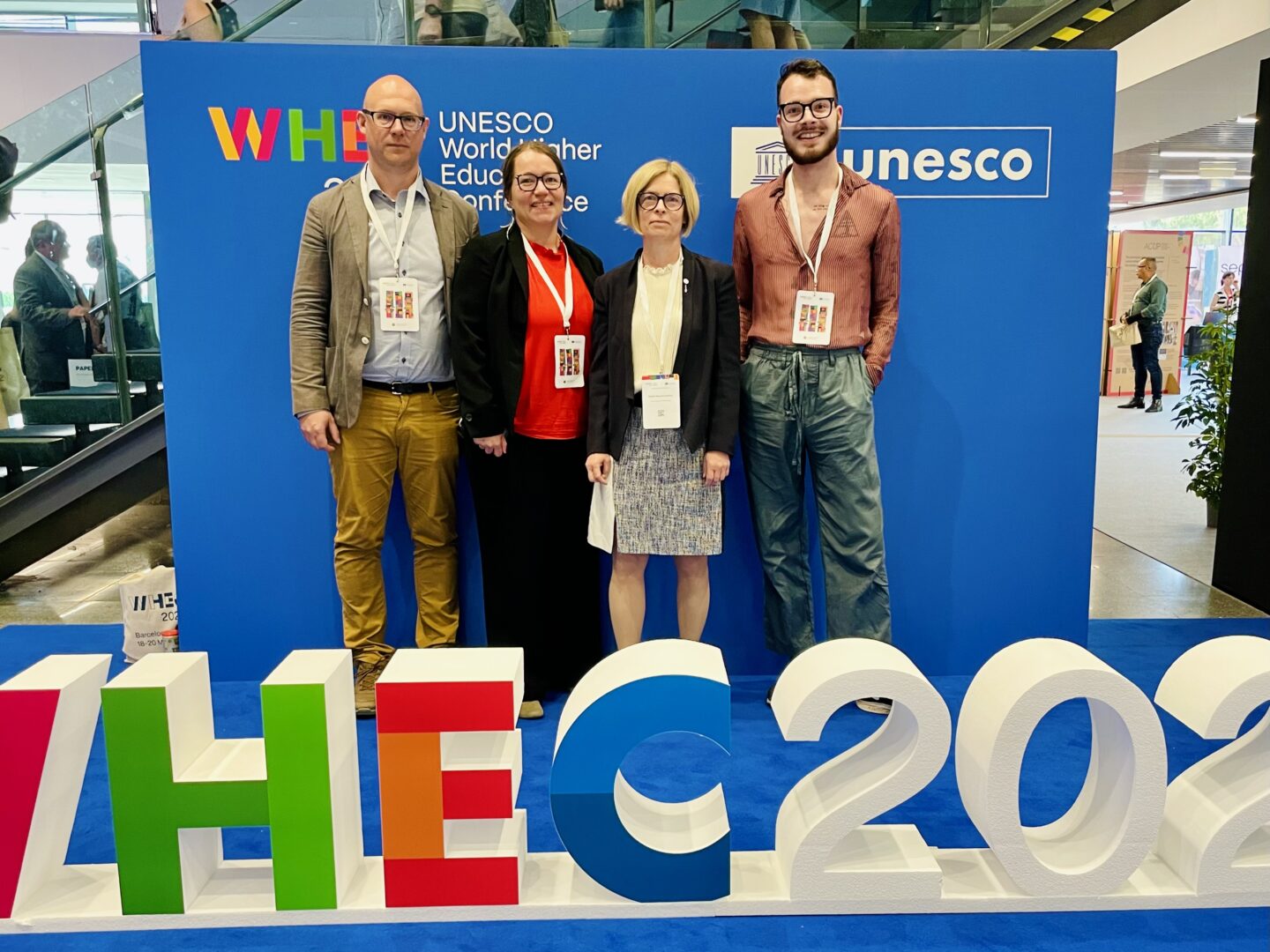
Sweden's delegation to WHEC2022 was established by the Swedish UNESCO Council and consisted of:
- Birgitta Bergvall-Kåreborn, Vice-Chancellor, Luleå University of Technology
- Johan Gribbe, investigator at the University Chancellor's Office (UKÄ)
- Frédérique Lémery, Departmental Secretary at the Ministry of Education
- Oskar M Wiik, Vice President of the Swedish National Union of Students
The conference had nine focus areas, these were:
- The impact of Covid-19 on higher education
- Higher education and the SDGs
- Equality and inclusion
- Higher education quality and relevance
- Academic mobility
- Governance in higher education
- Data and knowledge production
- International cooperation to increase synergies
- The future of higher education
Reflections
If I completely ignore the total lack of student participation in the planning and implementation of the conference, I can give it relatively high marks; it was truly a world conference. During the three days of the conference, Fira Barcelona and Caixa Forum were packed with workshops, seminars and lectures. Outside the halls, every millimeter of space was filled with meetings, exhibitors and arranged conversations in smaller formats.
Through the breadth of representatives the Swedish delegation had, we were able to capture and focus on several of the different areas in each direction. SFS participated primarily in the forums that discussed equality with a focus on refugee reception and inclusion of students in need of extra support. Here, the student unions are well placed to contribute to the areas that higher education institutions more often fail on: the social aspects and actual participation in education.
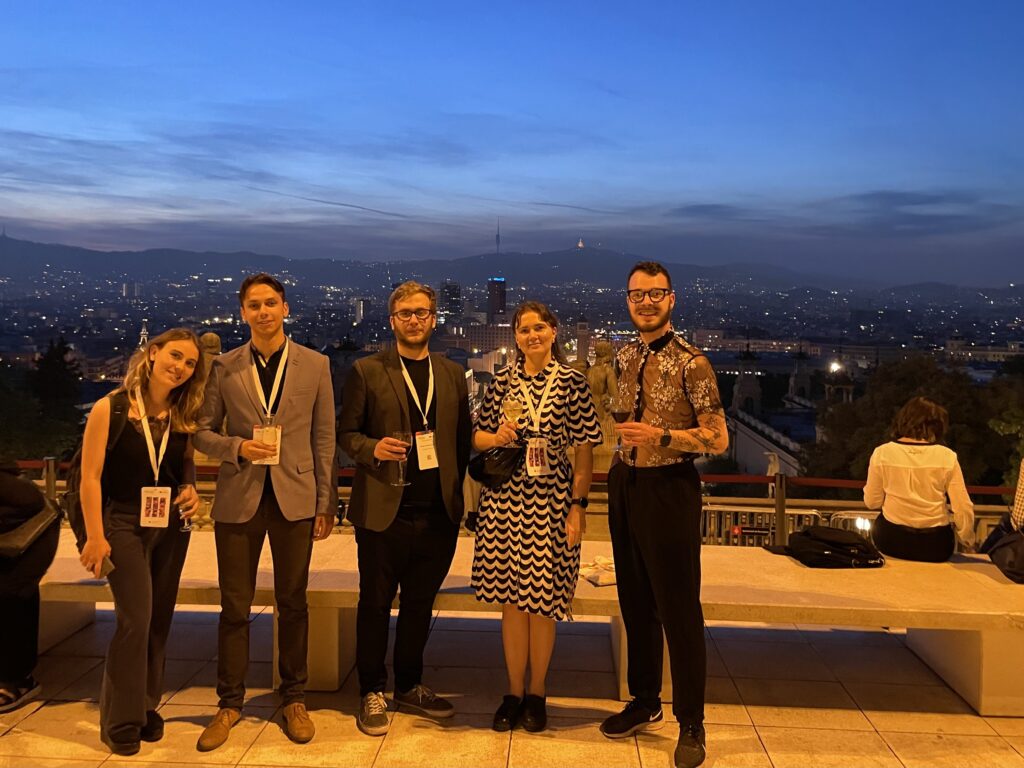
Of course, I also took the opportunity to discuss common issues and challenges with student representatives from Bulgaria, Finland, Latvia, Lithuania, Norway and Spain, among others. During the first evening's welcome mingle, I also got stuck in for a long time with a student from the Universitat de Barcelona and discussed quality, sexual harassment in academia, tuition fees and student loans.
Sweden has undoubtedly come a long way when it comes to the openness of higher education – but we often lose out in providing real conditions for studies. Lack of conditions both within and outside the walls of higher education institutions determines who has the opportunity to participate and engage in their education. We can also achieve stronger and more quality-certified governance of higher education by raising ceilings and abolishing performance- and efficiency-based financing.
I am grateful to have participated in the World Higher Education Conference on behalf of the Swedish student movement. I feel inspired, knowledgeable and ready to pass on the knowledge I have gathered to SFS.
At the end of the conference, the following was also presented: New Visions for Higher Education towards 2030Everyone can access it here by clicking on the title.