DEBATE, the article was published in Universitetsläraren 12/11-2020. Read the article at universitetsläraren.se here
When the corona pandemic hit Sweden at the end of March this year, all higher education institutions were affected. Education was switched to distance learning and researchers and students had to work from home. This also applied to us doctoral students. It has now been seven months since the pandemic started and we do not know how long this will last. We see our research projects being cancelled or postponed and we are falling behind in our education. When we ask higher education institutions how this should be handled, we get the answer that we have to plan based on the situation. An answer that rings hollow when reasonable conditions are lacking.
We now demand that universities take doctoral programs seriously and give doctoral students a real opportunity to complete their programs.
We want to:
- All doctoral students who were enrolled in March 2020 and are still in an ongoing education should have the opportunity to extend due to the consequences of corona. The proposal is an extension of two months, beyond which individual assessments for further extensions should be made.
- Extension is administered centrally at each higher education institution to avoid differences between institutions resulting in unequal treatment.
Since the corona pandemic began, our education programs have had mandatory elements such as courses and international research stays canceled in several cases. The restrictions have also meant that it has been impossible for many to utilize the resources and materials required for one's research. This can involve study visits, data collection, access to archives and the opportunity to conduct experiments and interviews. A direct consequence is that essential parts of the research elements must be postponed to the future. At the same time, the date for one's degree remains, which means that several doctoral students cannot finish their projects on time, or cannot finish them at all and thus cannot complete their education. A great deal of stress is currently being dealt with by many doctoral students.
Many of us are working from home today, on the advice of our universities, in an often inadequate work environment. We want and should follow the restrictions, but then the universities also need to ensure that every doctoral student has the opportunity to benefit from a work environment that is both physically and mentally sustainable. That is not the case today. A great value of doctoral education is also being part of a research context, having scientific discussions with other researchers and interacting with your supervisor. This community is not to be underestimated and has been largely lost or weakened since the corona pandemic started.
Doctoral students have long been a group that suffers greatly from stress and mental ill health. This has become more relevant during the pandemic as much of the teaching has taken place remotely, which has made it even more time-consuming. During the spring, surveys were conducted by the SFS Doctoral Committee, several doctoral councils and a doctoral student union to map the consequences of the corona pandemic. Mental ill health is stated as a problem by almost all respondents. This is serious and changes are required so that doctoral education can be conducted in a way that provides a sustainable study situation for the doctoral student.
Doctoral students, due to their position as researchers, students and often also teachers, become a vulnerable group within academia. This is not only devastating for the individual but also costly for higher education institutions if doctoral students do not complete or need to postpone their doctoral degree. The research of doctoral students is a significant part of ensuring that academia continues to develop and that new knowledge benefits society. At the same time, many higher education institutions also depend on the research of doctoral students to maintain their relevance and profile within their fields.
Today, it is very difficult to obtain an extension due to consequences related to the corona pandemic. The possibility of an extension also varies depending on the institution and subject area as it is affected by the financial possibilities of the institutions and higher education institutions. This results in the assessment varying from case to case and clear guidelines being lacking. To overcome this, central guidelines and transparent procedures for extension are required at each higher education institution.
The problem is becoming more and more acute and needs to be addressed immediately. The consequences of the corona pandemic need to be a valid basis for an extension of at least two months for all doctoral students, and a central organization is required at each higher education institution to implement and administer extensions. In this way, we increase the possibility that doctoral students will be able to complete their education. It is crucial for the individual, each higher education institution and Sweden as a knowledge nation.
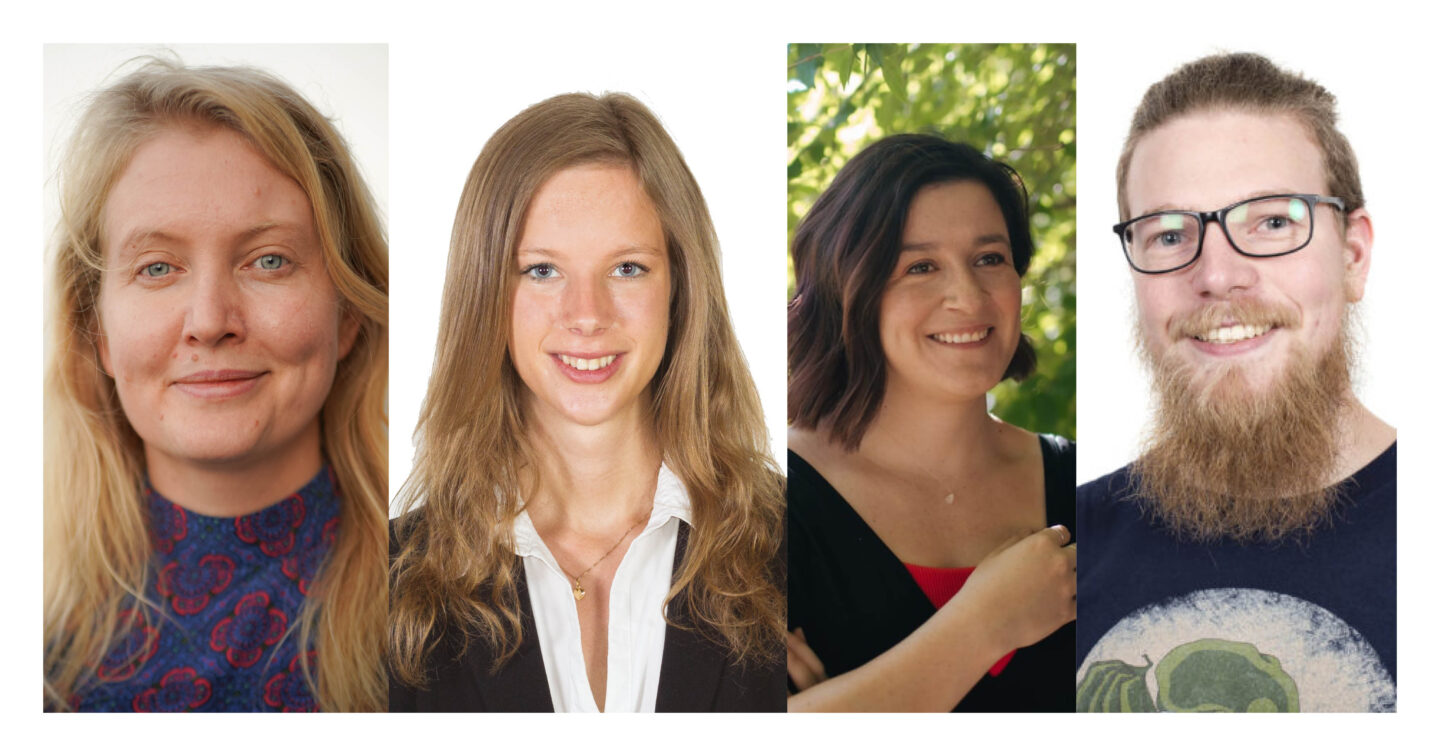
Pil Maria Saugmann, Chair of the SFS Doctoral Student Committee
Sara Gunnarsson, Vice Chair of the SFS Doctoral Committee
Juanita Velez Olivera, Vice President of SULF's Doctoral Student Association
Erik Bergenholtz, Chairman of SULF's Doctoral Student Association